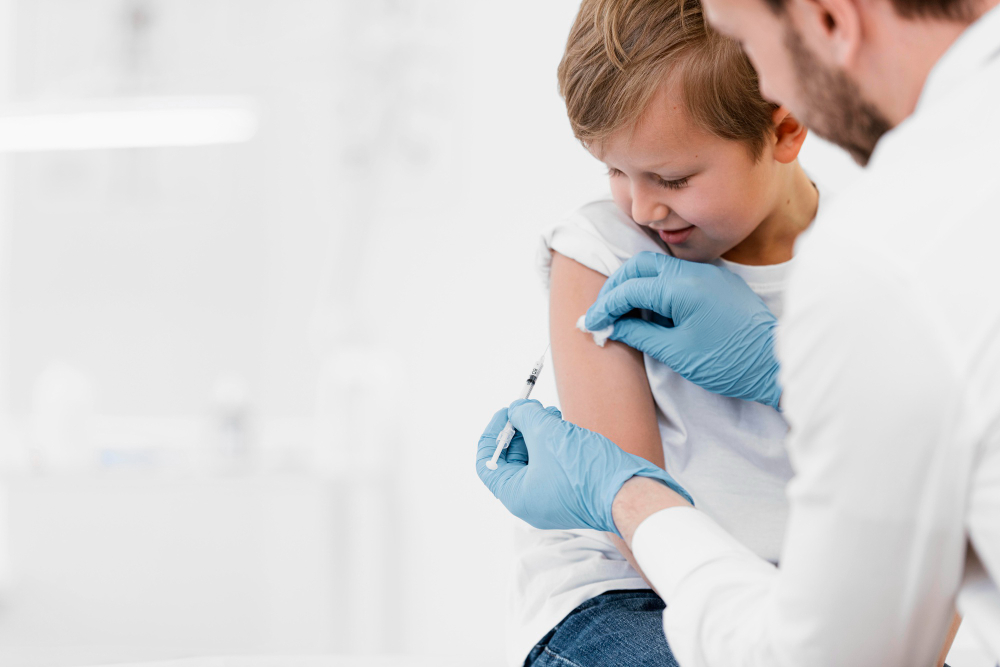
What is Child Vaccination?
Child vaccination is the process of giving vaccines to children to protect them from serious diseases. Vaccines help the body build defenses against infections. In fact, childhood immunization is one of the best ways to keep kids healthy. Many parents ask, “Why vaccinate children?” The answer is simple: vaccines save lives and prevent illness.
Why is Child Vaccination Important?
Vaccines protect children from diseases like measles, polio, and whooping cough. These illnesses can cause severe problems or even death. Moreover, when most children get vaccinated, it helps protect the whole community. This is called herd immunity. As a result, even babies too young for some vaccines stay safer. According to the CDC and WHO, vaccines have reduced many diseases worldwide. Therefore, child vaccination is a key part of public health.
Recommended Vaccination Schedule for Children
Doctors follow a set schedule to give vaccines at the right ages. This schedule is based on research and expert advice. Sticking to the childhood immunization schedule helps protect children when they are most at risk. Here is a general guide:
However, some children may need extra vaccines or a different schedule. Always check with your child’s doctor for the best plan.
Common Myths and Facts about Child Vaccination
Many myths about vaccines can worry parents. But, knowing the facts can help you make the best choice for your child. Here are some common myths and the truth:
Safety and Side Effects of Vaccines
Vaccine safety for kids is a top priority for doctors and health experts. Before approval, vaccines go through many tests. After approval, experts keep watching for any problems. Most side effects are mild and go away quickly. For example, your child may have:
Serious side effects are very rare. If you notice anything unusual, contact your doctor right away. Remember, the risk of disease is much higher than the risk from vaccines.
Tips for Parents: Making Vaccination Easier
Vaccination can be stressful for both children and parents. But, there are ways to make the experience better. Try these tips:
Also, talk to your child’s doctor if you have any concerns about the vaccine schedule or side effects.
Frequently Asked Questions (FAQs)
Conclusion and Next Steps
In summary, child vaccination protects your child and the community from dangerous diseases. Following the recommended childhood immunization schedule is the best way to keep your child safe. If you have questions about vaccine safety for kids or the schedule, talk to your pediatrician. For personalized advice, always consult your healthcare provider. Your child’s health is worth it.